It sounds like clickbait- “Make this one change and become happier, smarter, richer and more interesting!”
But its true.
Most people walk around for most of their lives completely disengaged from the natural world, which is making us dumb, depressed, fat and distracted. The average American spends 86.9% of their time indoors, with another 5.5% spent in vehicles. 92.4% of our lifetimes are spent inside.

You don’t need to suddenly pick up backpacking or long distance trail running to reconnect to nature. You don’t need to move to a cabin in the backwoods of Alaska or visit all the National Parks (though both of those would be nice). You don’t need to live in the wilderness to appreciate and notice nature.
You can simply decide to start paying attention. What plants do you see in your driveway? What birds do you see as you walk down the street to work? What type of rock is that? Is that plant native or invasive? What type of animal left this track? What type of insect is biting me?!
Adding a dose of wonder and curiosity to your daily life makes you more connected to the natural world.

I notice and appreciate the water droplets on this Mahonia repens!
A biology professor of mine had a saying that went somewhat along the lines of “Its a lonely world if you don’t know anything.” If you don’t know what you’re looking at, if you’ve never taken the time to stop and wonder, the world passes by in a bleak blur of unappreciated and unacknowledged green things. Every time I see a plant that I know the name of, I feel (corny as this sounds) less alone in the universe. Oh, hi there Hesperostipa comata. Hello, Pinyon Jay, Desert Cottontail.

Hello, Praying Mantis.
If you’re having trouble finding wonder to experience in your daily life, hang out with a kid for a few hours. Kids are fascinated and amazed by everything- soil in sidewalk cracks, ants, leaves on the ground, snow crystals.
We somehow lose that as we got older, more hurried and less willing to lay down on the ground and watch ants move grains of sand. It’s our loss.
Ready to get started? Here are some resources that might be helpful.
Didn’t I just say wonder is free? Well, it is, but if you want to get answers you might have to invest in (gasp) a library card!
Field guides (especially ones with lots of pictures) are an excellent companion. Most libraries will have a few different types, which is an excellent way to find out what type of field guide you prefer. Once you have one you enjoy using, it’s nice to have your own copy and mark things you’ve seen (and watch it get satisfyingly beat up from use). Laminated pamphlets can be extremely helpful for beginners as they are less overwhelming and focus on the most common species in an area.

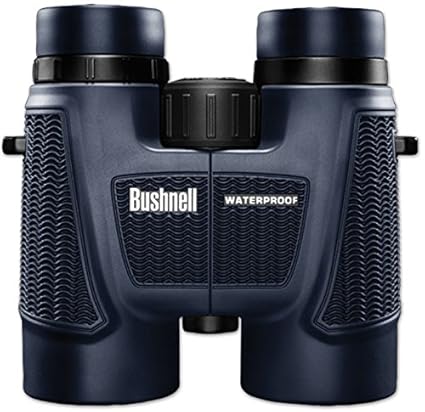
Binoculars! They are a slight investment but I am always amazed at how much use I get out of mine. I have these and love them.
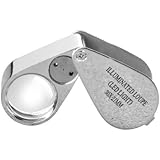
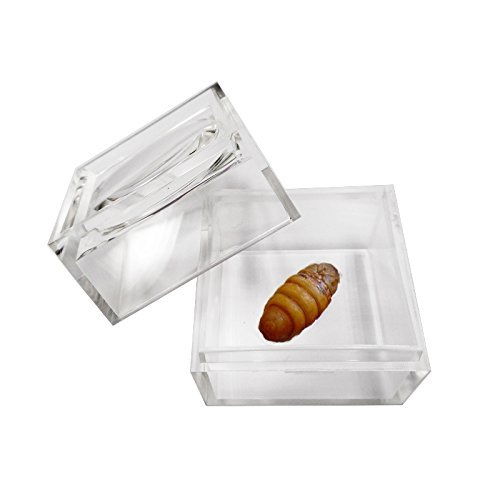
Magnifying glass/hand lens. Children go crazy over a magnifying glass and we adults should too. Excellent for more detailed plant and insect ID or just for increasing amazement. Bug boxes with a magnifying top are fantastic as well, especially if exploring with children.
These accessories are great, but you don’t need them! Just go outside right now and look at something and wonder about it.

What lives in this tiny, perfectly constructed hole? I have literally no idea, but I am amazed!



 Life, the Living of